A sugar mill roll bearing oil cannot be approved for a rubber-processing bearing from its trade name alone. You will be able to decide whether Crushwell 2, 3 or 4 fits your machine by matching its verified data with the bearing specification, lubrication method, seals, temperature and a controlled trial.
Key takeaways
- Obtain the current TDS and SDS for the exact Crushwell grade.
- Match viscosity and operating limits to the bearing maker’s specification.
- Confirm the machine uses oil lubrication before filling any reservoir.
- Approve the supplier and plant trial with documented acceptance criteria.
What evidence would make Crushwell suitable for a rubber-plant bearing?
The name crushwell roll bearing oil is not enough to select a lubricant. Obtain the current TDS and SDS for the exact Crushwell 2, Crushwell 3 or Crushwell 4 grade, then compare its data with the bearing or machine maker’s written specification.
| Evidence to check | What to compare | Why it matters |
|---|---|---|
| Kinematic viscosity at 40°C and viscosity index | Required viscosity and operating viscosity at the actual bearing temperature | A wrong grade can cause starvation, drag or overheating |
| Base-oil type and operating-temperature range | Approved base oil and the bearing’s measured temperature | Temperature limits affect film strength, oxidation and seal life |
| Oxidation stability and rust protection | Named test results or stated performance against the maker’s requirement | Heat and moisture can create varnish, corrosion and premature wear |
| Demulsibility | Water-separation result and contamination-control requirement | Poor separation leaves water circulating through loaded contacts |
| EP or antiwear chemistry and tackifier content | Additive suitability, adhesion requirement and allowable tackifier level | Excess tackifier can increase drag and attract carbon black or compound debris |
A distributor description or the category “general purpose machinery oil” cannot prove suitability. Internal mixers, two-roll mills, calenders, extruders and curing presses impose different speeds, loads, temperatures and contamination conditions. A sugar-mill-style roll oil may prioritise adhesion and water resistance, yet run hot in a faster bearing.
Approve Crushwell only when the exact grade matches the specified lubrication method, viscosity, additive and seal requirements. Then run a controlled trial and record temperature, leakage, oil cleanliness, vibration and wear before accepting it.
How do Crushwell 2, 3 and 4 differ before you fill the reservoir?
No grade is automatically “heavier,” “cooler-running,” or better for a rubber-processing bearing: compare Crushwell 2, 3 and 4 using their current product data, not the number on the container. ISO viscosity grades are compared by kinematic viscosity measured at 40°C; ambient temperature and label order do not reveal the viscosity inside a hot bearing.
| Grade | Confirm before selection | What the result must match |
|---|---|---|
| Crushwell 2 | Exact kinematic viscosity at 40°C and viscosity index | Bearing speed, actual operating viscosity and temperature |
| Crushwell 3 | Exact kinematic viscosity at 40°C and operating-temperature limit | Load, heat removal and the machine maker’s lubricant specification |
| Crushwell 4 | Exact kinematic viscosity at 40°C, base-oil type and additive package | Slow rotation, shock loading, high load or intermittent duty |
Request the exact figures for all three grades, then calculate or confirm viscosity at the bearing’s measured operating temperature. A high-viscosity oil can increase churning and heat in a fast bearing; a low-viscosity oil can leave slow, heavily loaded contacts inadequately separated.
Treat Crushwell roll bearing oil as suitable only after checking whether its formulation matches shock loading, slow rotation, high speed, intermittent duty and heat.
The TDS must state product operating-temperature limits, oxidation-stability and rust-test results, and water-separation performance. Ask for compatibility confirmation with bronze, brass, babbitt, plated surfaces and elastomer seals, especially where EP or active-sulfur chemistry is present. Without those documents, the grade choice remains unproved.
Does your rubber-processing machine use oil lubrication at all?
Crushwell can be delivered only if the machine is designed for oil lubrication and its delivery method matches the verified grade. A product labelled roll bearing oil cannot convert a grease-only bearing into an oil-lubricated bearing.
1. Identify the existing method from the machine manual: oil-bath or splash, circulating oil, oil mist, forced-feed, drip-feed or manual application. Do not infer it from the reservoir shape. A centralized system also needs confirmed pumpability, metering rate and compatibility with pumps, tubing and seals before connection.
2. Identify the bearing: rolling-element, plain journal, spherical roller or another design. Record rotational speed, radial load, axial load, bearing temperature, housing orientation and exposure to rubber compound, carbon black, water, steam or cleaning chemicals.
3. Check the manual’s oil specification and level instruction. In an oil bath, overfilling increases churning and heat; underfilling starves rolling contacts. The correct level depends on bearing geometry, speed, housing design and splash arrangement, so “fill to the housing” is not a safe instruction.
4. Do not replace grease with Crushwell in a grease-packed or sealed-for-life bearing. Oil can leak past seals, remove the intended lubricant quantity and cause premature failure.
5. For a circulating or forced-feed system, confirm the required flow, pressure, filtration and return path. For mist, drip-feed or manual application, confirm the delivery rate and frequency rather than guessing.
Only after these checks should you compare Crushwell’s exact grade with the maker’s viscosity, temperature and additive requirements. A controlled trial must then watch temperature, leakage, noise, vibration and oil cleanliness.
Why is sugar mill roll bearing oil not automatically general-purpose machinery oil?
A sugar-mill roll bearing oil is designed around a specific duty, not a universal bearing label. Sugar-mill roll assemblies can contain slow, heavily loaded plain journal bearings or rolling-element bearings; oil suited to the first can run hot in the second.
Rubber equipment adds heat, shock, carbon black, rubber compound, cleaning water or steam, and intermittent operation.
| Lubricant | Viscosity, adhesion and water behaviour | Load, contamination and delivery | Mismatch failure |
|---|---|---|---|
| Sugar mill roll bearing oils | Often higher viscosity and tack for retention and water or juice resistance | Load-carrying film for roll assemblies; oil bath, drip or manual application must be confirmed | Overheating, leakage or starvation |
| General-purpose machinery oils | Commercial category; ISO viscosity, tack and demulsibility vary by product | Additives and contamination tolerance require a specific check | Varnish, wear or water-related corrosion |
| Circulating oils | Pumpable viscosity and controlled water separation | Clean reservoir circulation and metering; limited tack is common | Leakage, starvation or varnish |
| Gear oils | Viscosity and extreme-pressure chemistry for enclosed gears | Active-sulfur and seal compatibility are critical | Seal damage or wear on incompatible bearing materials |
| Grease | Semi-solid adhesion rather than oil-flow behaviour | Delivered by packing or grease system, not an oil reservoir | Lubricant starvation, churning or blocked metering |
A tackifier can retain oil yet drag a faster bearing and collect carbon black. A high-viscosity oil can overheat; a thin circulating oil can fail the film in a slow, shocked journal bearing. Poor demulsibility leaves water at the contact, while oxidation creates varnish.
Confirm the bearing maker’s delivery method, seal material and active-sulfur compatibility before treating any sugar mill roll bearing oils as general-purpose machinery oil.
How should you approve a grade, supplier and plant trial?
Approve the purchase only after the bearing maker’s manual identifies the lubricant type, required ISO viscosity grade and delivery method. A product label or the phrase general purpose machinery oil dealers hp in belagavi does not establish approval.
1. Ask for the maker’s approved lubricant, ISO grade, oil-bath or circulation level, operating-temperature limit and seal compatibility. Confirm that the bearing uses oil; do not replace grease in a sealed-for-life or grease-packed bearing.
2. Write the purchase request precisely: state whether HP means Hindustan Petroleum, horsepower or high-pressure service. If Hindustan Petroleum is intended, specify the exact product name, grade and pack size, then request the batch number, current TDS, SDS and channel-authorisation evidence or an invoice trail.
3. For a Belagavi buyer, Bangalore Industrial Oils can help source the exact HP product and its documents; supply capability is not technical approval. Reject a seller who offers only “general purpose machinery oil dealers hp for rubber plant bearings in belagavi” without traceable product evidence.
4. Run a controlled trial at a defined interval and record baseline and final bearing temperature, oil level, leakage, vibration, noise, power or torque, oil appearance and wear-debris or particle results. Stop for rising temperature, abnormal noise, worsening vibration, excessive leakage or unacceptable contamination.
Crushwell is right only when its verified grade, additive package and delivery method match the machine, and every trial measure remains within limits set before the trial begins.
Related product
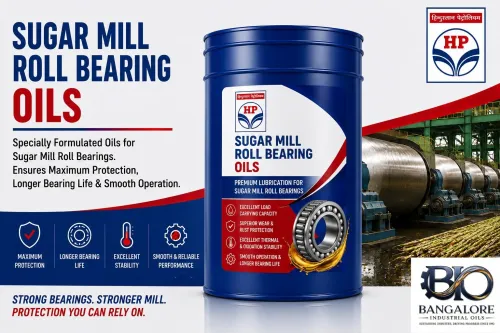
 | SUGAR MILL ROLL BEARING OILS CRUSHWELL - 2/3/4 Bangalore Industrial Oils is a trusted dealer of CRUSHWELL 2/3/4 Sugar Mill Roll Bearing Oils, offering premium lubrication solutions for heavy-duty... |
Frequently asked questions
What evidence would make Crushwell suitable for a rubber-plant bearing?
Obtain the current TDS and SDS for the exact Crushwell grade, then compare viscosity, operating temperature, additives, compatibility and application guidance with the bearing or machine maker’s written specification.
How do Crushwell 2, 3 and 4 differ before you fill the reservoir?
Do not select by grade number alone. Compare the current TDS for Crushwell 2, Crushwell 3 and Crushwell 4, including viscosity, intended application, temperature limits and compatibility information.
Does your rubber-processing machine use oil lubrication at all?
Check the machine manual, lubrication chart and reservoir label. A grease-lubricated bearing or sealed-for-life bearing is not converted to oil lubrication merely because roll bearing oil is available.
Why is sugar mill roll bearing oil not automatically general-purpose machinery oil?
Its formulation and viscosity may target roll-bearing service rather than every gearbox, pump or machine bearing. Use it only when its TDS matches the equipment specification.
How should you approve a grade, supplier and plant trial?
Document the equipment requirement, selected grade, supplier documents, fill quantity, cleaning plan, trial duration and acceptance limits before authorising the change.