A production line cannot approve a straight cutting oil from the product name alone. You need to match the grade to the operation, metal, delivery method and machine-fluid system, then prove performance through controlled trials and condition monitoring.
Key takeaways
- Use neat oil for tapping, broaching, threading and other heavily loaded cuts.
- Match the Trimoffin grade to metal, operation, viscosity and extreme-pressure requirements.
- Control delivery, filtration, temperature and contamination before increasing production volume.
- Confirm grade-specific stock and run a measured trial before changing the whole line.
Choose the machining operations and metals that suit neat oil
Use neat oil without dilution when boundary lubrication, surface finish and extreme-pressure protection matter more than maximum cooling. The strongest straight cutting oil applications are tapping, broaching, thread cutting, gear cutting, deep-hole drilling and difficult-to-machine alloys. It is a cutting fluid for manufacturing plants that need lubricity at a heavily loaded tool-workpiece interface.
| Operation | Suitability | Reason |
|---|---|---|
| Tapping, broaching, threading, gear cutting, deep-hole drilling | Strong fit | Reduces friction, tearing and tool loading |
| Turning, milling, sawing, conventional drilling | Condition-dependent | Choose by speed, heat, tool geometry and chip evacuation |
| High-speed grinding | Usually poor fit | Heat removal normally matters more than boundary lubrication |
Water-mixed soluble oil or synthetic coolant removes heat more effectively; neat oil normally provides higher lubricity and lower microbial growth. Choose turning, milling, sawing or conventional drilling only after checking temperature, mist, fire controls and delivery access.
Neat oil suits carbon and alloy steels, stainless steel, cast iron, aluminium and copper alloys when the grade’s chemistry matches the job. Nickel-based and other difficult-to-machine alloys often justify its stronger lubricating and extreme-pressure performance.
Active sulfur can stain or attack copper, brass and other yellow metals, so confirm the copper-corrosion result; do not infer compatibility from the word sulfur alone. High-speed grinding usually needs a water-miscible or synthetic fluid because rapid heat removal prevents burns, distortion and wheel-loading.
Approve the exact Trimoffin grade from its technical data
Approve a Trimoffin grade only after matching its documented properties to the machine, operation and materials. A product name or series brochure alone cannot establish suitability as a cutting fluid for manufacturing plants.
1. Request the current, grade-specific technical data sheet and safety data sheet. Record kinematic viscosity at 40 °C with the stated test method, base-oil type, density, flash point, sulfur and chlorine status, copper-corrosion result, recommended operations and every extreme-pressure performance claim.
2. Compare viscosity at the same temperature and method across quotations. Viscosity affects pumpability, penetration into the cut, oil-mist generation and drag-out losses; an oil that is too heavy can overload delivery equipment, while one that is too light can increase mist and carry-out.
3. Confirm the sulfur chemistry in writing. Active sulfur can strengthen extreme-pressure performance during severe cutting, but it can stain or attack copper, brass and other yellow metals. Obtain written confirmation for the actual tool material, workpiece alloy, seals, hoses, pump components, coatings and workholding equipment.
4. Treat flash point as one fire-screening value, not approval of the whole installation. Review mist concentration, hot surfaces, sparks, enclosure design, ventilation and extraction with the plant’s fire and safety process.
5. Use the SDS to set controls for oil mist and skin contact, including PPE, first aid and contaminated-wipe disposal. A high-flash-point oil is not automatically harmless or suitable for every machine.
Set oil delivery, filtration and reservoir controls on the line
Choose delivery by tool access, cutting load and the machine’s pump capacity; cutting fluid for manufacturing plants is not controlled by one method.
| Method | Access and load | Chip evacuation, mist and equipment check |
|---|---|---|
| Flood | Reaches exposed tool-workpiece zones under heavy loads | Carries chips well; check pump capacity, return flow and mist extraction |
| Drip | Feeds an accessible interface at modest loads | Limited chip flushing; control drop rate and prevent pooling |
| Brush | Reaches an exposed edge or intermittent cut | Little evacuation and low pump demand; use a repeatable brush method |
| Minimum-quantity lubrication | Delivers a small metered film where access is direct | Low consumption but higher mist risk; verify metering, air pressure and extraction |
| Through-tool | Reaches deep holes and enclosed interfaces | Strong chip evacuation; verify pressure, clean filtration and passages against pump limits |
Commission the line in this order:
- Set flow against the oil grade and operation, then aim the nozzle at the tool-workpiece interface.
- Verify the sump level sits inside the marked operating range.
- Inspect filters, screens, settling areas and return paths before cutting.
- Record baseline viscosity, colour and odour, then check sump level, water ingress, fines, tramp oil and filter loading against it.
Refractometers measure concentration in water-miscible fluids, not neat oil. Keep drums and day tanks closed and protected from rain and condensation; dispense through clean equipment, and never add water to adjust viscosity. Through-tool delivery and flood circulation require separate pressure and filtration checks, while brush and drip application require a documented, repeatable operator method.
Control heat, contamination and fluid changeover failures
1. Smoke points to heat or delivery. Check excessive flow temperature, restricted circulation and poor nozzle targeting at the tool-workpiece interface. Correct the flow, aim the nozzle into the cutting zone and investigate hot surfaces or ignition sources before increasing oil delivery.
2. Foam indicates water contamination or unsuitable additives. Test for water rather than adding antifoam blindly. Water in neat oil can cause corrosion, unstable performance, foaming and localised vapour at hot interfaces; inspect drums, day tanks, seals and return paths for rain, condensation or leaks.
3. Darkening requires an oxidation and overheating investigation. Compare the oil’s viscosity and colour with the recorded baseline, inspect hot spots and check whether circulation exposes the fluid to excessive air or temperature. Filtration removes some fines but does not restore depleted additive chemistry.
4. A strong odour requires checks for microbial contamination, degraded additives and tramp-fluid ingress. Inspect for soluble coolant, cleaner, hydraulic oil and other foreign fluids, then send a representative sample for condition testing before continuing production.
Set the change-out limit from viscosity, contamination, tool-life and surface-finish data, not a calendar date alone. Do not casually top up contaminated oil.
Before changing grades, drain the reservoir and circulation system, then:
- Inspect seals, hoses, pumps, coatings, filters and return paths.
- Flush with a procedure approved for the machine.
- Document the drained condition, flush, new grade, batch and refill quantity.
Do not mix previously used cutting oil, soluble coolant, tramp oil, cleaning agents or a new formulation without a compatibility check. Refractometers do not control neat oil. Review the SDS and plant safety process for mist exposure, skin contact, ignition sources and contaminated wipes; high flash point does not mean zero hazard.
Run a controlled trial and verify the supplier’s grade-specific stock
Approve a quotation only when it identifies the exact Trimoffin grade, not just the series. Require the batch number, manufacture date, shelf-life or revalidation policy, pack size, current stock location, delivery lead time, and written confirmation that the material is factory-sealed or locally repacked.
Ask for:
- The invoice, container label, batch document, technical data sheet and safety data sheet, all naming the same grade.
- Written confirmation of the manufacturer, wholesale stockist or HP-authorised clearing-and-forwarding distributor.
- An unopened sample or certificate if your incoming-inspection procedure requires one.
Someone searching for cutting oil wholesalers hp in belagavi should separate these three channel roles. Authorisation supports provenance and dispatch capability; it does not prove technical suitability, current stock or warranty coverage.
For the trimoffin series in belagavi, Bangalore Industrial Oils can be considered when its quotation provides this grade-level traceability instead of relying on series branding.
Run the machining trial under fixed conditions, then compare the results:
| Check | Hold constant or record | Acceptance evidence |
|---|---|---|
| Tool and process | Tool material, geometry, speed, feed, depth of cut, alloy, filtration and oil delivery rate | Repeatable test conditions |
| Performance | Tool life, spindle load or cutting force, surface roughness and dimensional drift | Meets your production limits |
| Defects and exposure | Burrs, staining, oil consumption and operator exposure | No unacceptable defect or exposure |
Do not approve the grade because the first part looks clean. Release it only after the trial results, SDS controls and matched batch documents pass your written criteria.
Related product
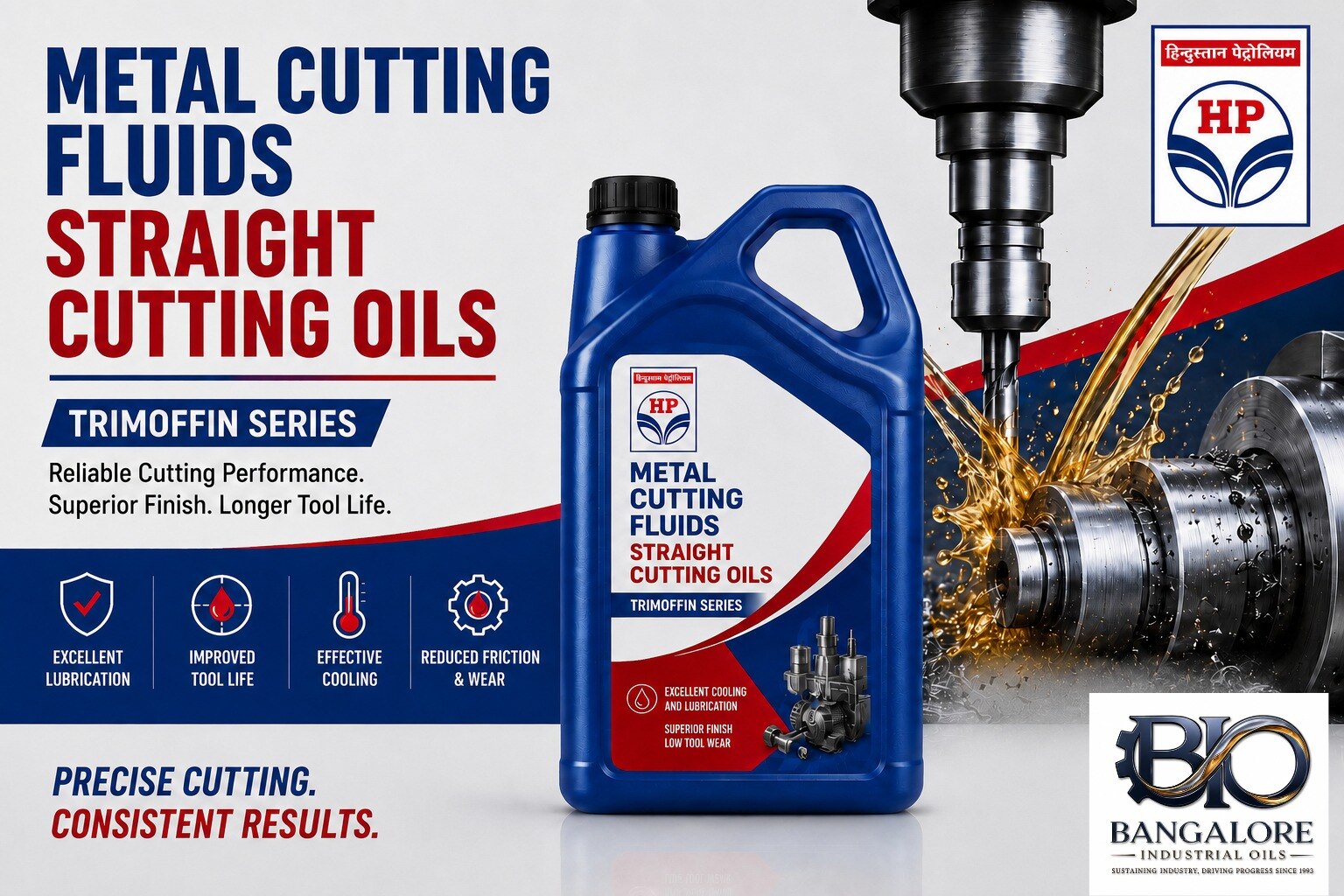
 | METAL CUTTING FLUIDS STRAIGHT CUTTING OILS Searching for reliable Metal Cutting Fluids – Straight Cutting Oils dealers in Karnataka? Bangalore Industrial Oils is a leading supplier offering... View product → |
Frequently asked questions
Which machining operations suit neat cutting oil?
Use neat oil for tapping, broaching, thread cutting, gear cutting, deep-hole drilling and difficult-to-machine alloys when lubricity and extreme-pressure protection outweigh maximum cooling.
How do you approve the exact Trimoffin grade?
Check the technical data for the recommended operation, metal, viscosity, additive type, temperature range and compatibility requirements, then match those details to your machine process.
What line controls matter when using straight cutting oil?
Set the delivery nozzle and flow, maintain filtration, monitor reservoir temperature and prevent water, chips and incompatible fluids from entering the system.
How should you validate a new Trimoffin grade?
Run a controlled trial, record tool life, surface finish, cutting temperature, oil consumption and operator observations, then confirm the supplier has the exact grade in stock.