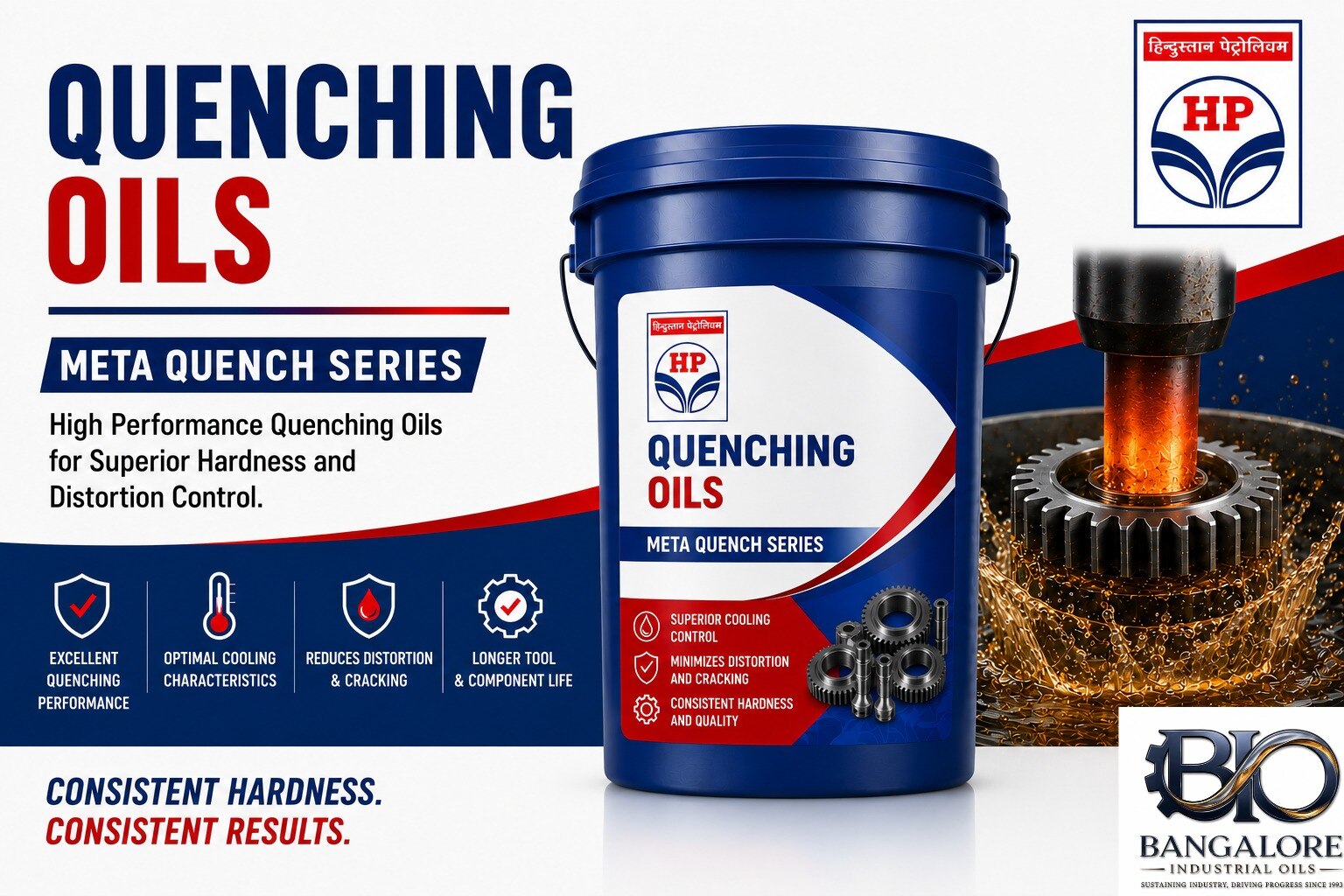
A Meta Quench grade and an HP-distributed quenching oil are not comparable until you identify the exact product, process, and operating conditions. By the end, you will have a data-led checklist for selecting, trialling, and buying the oil that delivers the required cooling performance without hiding costs in distortion, contamination, or rejected parts.
Key takeaways
- Match a named Meta Quench grade with a named HP grade.
- Compare viscosity, flash point, cooling curve, and operating temperature.
- Control bath temperature, agitation, contamination, and oil volume.
- Request the HP grade, batch number, technical data sheet, and licence details.
Are you comparing a product range with a supply channel?
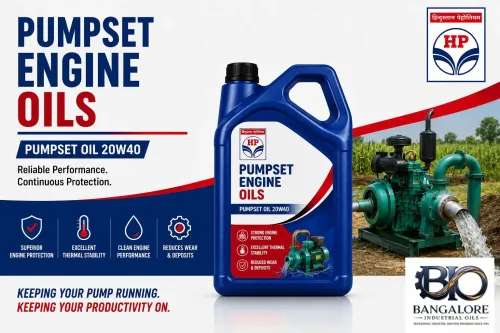
Meta Quench Series is a product family or grade range; quenching oil wholesalers HP describes a supply channel that may provide one or more HP grades. They are not competing products. A valid quenching oil comparison matches a named Meta Quench grade with a named HP grade.
Ask for:
- Exact product code for each oil, current technical data sheet, batch certificate of analysis, manufacturing date, and pack size.
- Intended process and bath temperature, including whether the work involves plain carbon steel, alloy steel, carburized parts, press hardening, or batch-furnace work.
- Confirmation that each oil is conventional, accelerated, fast, or hot quenching oil.
| Comparison point | Meta Quench grade | HP-supplied grade |
|---|---|---|
| Product identity | Exact code and batch | Exact code and batch |
| Process fit | Steel, furnace, and bath temperature | Steel, furnace, and bath temperature |
| Evidence | Current data sheet and certificate | Current data sheet and certificate |
| Operating behaviour | Cooling curve at stated agitation | Cooling curve at stated agitation |
Do not treat matching ISO VG 32 numbers as interchangeability proof. ISO VG 32 defines the viscosity band, not the additive package, cooling curve, oxidation life, sludge tendency, or seal compatibility.
State the result as “grade A versus grade B at this bath temperature and agitation,” never as “Meta Quench versus HP.” That is the defensible quenching oil comparison.
Which specification values show whether the oil fits your process?
The purchase decision rests on measured performance, not the name Meta Quench Series or the supplier channel. A valid quenching oil comparison matches individual grades against the process and requests these records:
- Viscosity at 40°C, tested by ASTM D445 or an equivalent ISO method
- Flash point on the same documented basis, normally ASTM D92
- Density, if listed
- Maximum operating temperature
- Oxidation-stability information
- Sludge and deposit data
For process selection, use this distinction:
| Option | What it means | When it applies |
|---|---|---|
| Conventional oil | Controlled, moderate cooling | Steel and sections that need lower severity |
| Accelerated or fast oil | Greater cooling severity | Steel and sections requiring faster heat extraction |
| Hot quenching oil | Rated for a high-temperature bath | Confirm the upper temperature limit before use |
| Water, polymer, salt, or gas | Alternatives to standard oil | Distortion, cleanliness, section thickness, or furnace design rules out oil |
For press hardening, carburizing, and batch-furnace work, require an ISO 9950 cooling curve measured on production oil at the intended bath temperature and agitation. The report must show maximum cooling rate, temperature at that maximum, and cooling time through the relevant martensite range. A room-temperature, undisturbed curve does not predict an agitated tank at 60–90°C.
Martempering or marquenching needs a process-specific curve and tight temperature control. Vacuum furnaces need oil approved for vacuum service. Viscosity alone cannot reveal cooling behaviour, oxidation damage, or deposit formation.
How do tank conditions change hardness, distortion, and cracking?
A sound quenching oil comparison starts with repeatable tank conditions, because hardness, distortion, and cracking can change even when the oil label does not. Use a calibrated sensor, record bath temperature during loading, and note the effect of temperature on viscosity, vapour formation, and the cooling curve.
1. Set agitation to the furnace or tank specification and verify actual flow. Excessive movement can increase distortion; insufficient movement creates soft spots. Keep a defined oil-to-load ratio and repeat the same charge mass for every trial.
2. Transfer parts quickly and consistently, exposing their largest surfaces to flow. Do not nest parts or trap air, and orient holes and pockets so the oil is not shielded. Record furnace-to-oil transfer time and the required quench time for each steel grade and section.
3. Treat alloy composition, prior heat treatment, scale, geometry, and surface-area-to-mass ratio as process variables. Filter at the planned interval, remove sludge, and use compatible makeup oil rather than an unapproved blend.
4. Keep drums closed, dry, and protected from rain and condensation. In humid Mangaluru conditions, free water can cause violent boiling, foam, staining, and non-uniform cooling; a clear sample does not prove that dissolved or finely dispersed water is absent.
Record hardness, distortion, cracks, and oil condition after each load. A quenching oil comparison is meaningless if one trial uses different flow or loading. Ask quenching oil wholesalers HP for production-bath cooling data at your operating temperature and agitation, not an undisturbed room-temperature curve.
How should you run a fair oil trial and monitor bath life?
Run both oils through the same steel grade, furnace cycle, load pattern, charge-to-oil ratio, transfer time, bath temperature, agitation, and part orientation. Measure hardness at defined locations, then inspect distortion, cracks, staining, retained austenite where relevant, and dimensional change. Save cooling-curve results from the production bath, not catalogue claims such as “fast” or “high performance.”
| Criterion | Meta Quench Series grade | HP-distributed grade |
|---|---|---|
| Steel and cycle | Same grade and furnace cycle | Same grade and furnace cycle |
| Bath conditions | Same temperature and agitation | Same temperature and agitation |
| Results | Hardness, distortion, cracks, staining, dimensions | Hardness, distortion, cracks, staining, dimensions |
| Cooling evidence | Production-bath cooling curve | Production-bath cooling curve |
Before changing products, test the used oil for viscosity, water, sludge, oxidation indicators, and cooling behaviour. Do not top up one formulation with another: additive incompatibility can change deposits and create an unrepresentative cooling curve. A tank changeover normally requires draining, cleaning or filtration, and checking residual-oil compatibility.
Track these bath-life measures for every trial and production period:
- Bath temperature and agitation
- Filtration, sludge removal, and makeup volume
- Oil carry-out on hot parts and drag-out into washing systems
- Viscosity, water, oxidation indicators, cooling behaviour, rejected parts, and disposal quantity
Compare cost per treated tonne or batch, not drum price alone. A higher unit price can cost less after reduced top-up oil, filtration, disposal, rework, and rejected components. That is the result a useful quenching oil comparison must prove.
What should a Mangaluru buyer verify before ordering HP or Meta Quench oil?
Before placing the order, verify the supplier and the individual grade, not just the brand name. Bangalore Industrial Oils can help source HP products or a Meta Quench grade for Mangaluru, but local availability does not prove equivalence, fresh stock, or authorization for every grade.
| Check | HP-distributed grade | Meta Quench grade |
|---|---|---|
| Exact identity | HP product code and pack size | Meta Quench product code and pack size |
| Documents | Current technical data sheet and batch certificate | Current technical data sheet and batch certificate |
| Process fit | Conventional, accelerated, fast, or hot; cooling curve at your bath temperature and agitation | Same classification and same test conditions |
| Supply control | Manufacturing date, storage history, delivery-point authorization | Manufacturing date, storage history, delivery-point authorization |
| Condition | Intact bung and seams; no rust, leaks, or water exposure | Intact bung and seams; no rust, leaks, or water exposure |
Ask the supplier to state viscosity at 40°C, flash point, maximum operating temperature, oxidation information, sludge or deposit data, and the test method for each value. A catalogue term such as “fast” is not evidence that the oil matches your tank.
Also compare:
- Freight and delivered cost
- Minimum order and replenishment time
- Emergency availability after a delayed batch
- Stock rotation by manufacturing date, rather than assuming unopened drums last indefinitely
Keep drums closed and dry. Do not mix the replacement with used oil until compatibility is confirmed; drain, clean or filter the tank first.
Make the purchase conditional on a documented acceptance trial using identical steel, load pattern, bath temperature, agitation, charge-to-oil ratio, transfer time, and part orientation. Record cooling curves, hardness, distortion, cracks, staining, retained austenite where relevant, bath life, and treated-part cost.
That is a sounder comparison than choosing between Meta Quench Series and quenching oil wholesalers HP by label alone.
Frequently asked questions
Are Meta Quench Series and HP quenching oil direct competitors?
No. Meta Quench Series is a product family, while HP refers to a supply channel or named HP grade. Compare two specific grades.
Which specifications matter in a quenching oil comparison?
Check viscosity, flash point, cooling-curve results, recommended operating temperature, oxidation resistance, and compatibility with your steel and process.
How do tank conditions affect quenching results?
Bath temperature, agitation, oil volume, contamination, and heat load influence hardness, distortion, cracking, and cooling consistency.
How should you conduct a fair quenching oil trial?
Use identical parts, furnace conditions, transfer times, bath temperature, agitation, and inspection methods, then track hardness and oil condition over time.
What should a Mangaluru buyer verify before ordering HP or Meta Quench oil?
Confirm the exact grade, sealed packaging, batch number, technical data sheet, certificate details, delivery conditions, and the supplier’s HP authorisation documents.