Choosing a Trimoffin grade requires more than matching a brand name to a machining job: you need the operation, workpiece alloy, tool, delivery method, and technical data sheet. By the end, you will know how to screen a grade, use neat straight oil correctly, compare it with water-miscible coolant, and verify a Belagavi supplier before ordering.
Key takeaways
- Use straight cutting oil as supplied; do not dilute it with water.
- Match viscosity and extreme-pressure performance to the alloy, tool, and cut.
- Check oil level, contamination, odour, mist, and surface finish during use.
- Ask sellers for sealed packs, batch details, invoices, and HP-authorised supply proof.
What straight cutting oil means before you choose Trimoffin
A straight cutting oil is a neat, oil-based metal cutting fluid for engineering workshops, used as supplied rather than diluted with water. That distinguishes it from soluble oils, semi-synthetic fluids, and synthetic coolants, which form water-based mixtures.
Do not add Trimoffin to a sump unless its technical data sheet explicitly identifies that grade as emulsifiable or water-miscible.
| Option | Main strength | Appropriate starting point |
|---|---|---|
| Straight cutting oil | High lubrication and tool protection | Difficult cuts, demanding surface finish, or operations where oil delivery is practical |
| Water-miscible coolant | Faster heat removal and easier bulk cooling | High-speed machining, heavy heat loads, or machines designed for coolant circulation |
| Semi-synthetic or synthetic coolant | Water-based balance of cooling, cleanliness, and lubrication | General machining where heat control and housekeeping outweigh maximum oiliness |
Choose neat oil only after checking the operation, cutting speed, workpiece alloy, tool material, delivery method, finish requirement, and whether cutting is intermittent or continuous. The label “metal cutting fluid for engineering workshops” is not enough to identify a suitable grade.
For aluminium, copper, brass, and other yellow metals, require copper-strip corrosion, staining, and compatibility data. Extreme-pressure sulfur or chlorine chemistry can improve difficult cutting yet damage sensitive alloys. Flash point screens fire risk; it does not make oil nonflammable. Control ignition sources, mist, spills, and contaminated transfer containers.
Match the Trimoffin grade to the operation, alloy, and tool
Approve a Trimoffin grade only when the exact product name and current technical data sheet match the job. “Trimoffin series applications” is not enough: grades can differ in viscosity, extreme-pressure additives, staining tendency, and mist behaviour.
Compare these machining details against the named grade:
| Check | Compare on the technical data sheet | Why it changes grade |
|---|---|---|
| Operation | Turning, milling, drilling, tapping, broaching, sawing, grinding, or gear cutting | A tapping or broaching load may need stronger boundary lubrication than light turning |
| Cutting conditions | Cutting speed, feed, depth of cut, tool engagement, and heat generation | High speed and heavy engagement change viscosity and additive requirements |
| Workpiece alloy | Carbon steel, stainless steel, cast iron, aluminium, copper alloy, or difficult-to-machine alloy | Sulfurised or other additives can stain or react with some non-ferrous metals |
| Tool | High-speed steel, carbide, ceramic, or coated insert | The tool material affects friction, heat tolerance, and surface protection |
| Process and delivery | Intermittent or continuous cutting, plus flood, drip, brush, or minimum-quantity delivery | Delivery volume and shock loading affect cooling, mist, and film strength |
| Finish and machine limits | Required surface finish, chip control, seals, paint, and ventilation | An unsuitable oil can damage finishes, increase mist, or leak past seals |
Ask the supplier to identify the exact grade for your operation, alloy, tool, speed range, and delivery method. Do not approve it if the TDS omits the relevant application, viscosity, compatibility warning, or water-miscibility status.
Use the oil as supplied unless the TDS explicitly calls it emulsifiable or water-miscible. Never pour an unidentified Trimoffin grade into a water-miscible coolant sump.
How to deliver, monitor, and maintain neat cutting oil
Use straight oil as supplied: do not add water unless the technical data sheet explicitly identifies the product as emulsifiable or water-miscible. A sump that held soluble coolant must be drained, cleaned, and dried first; residual water can cloud the oil, cause corrosion, and reduce lubrication.
- For sump or flood delivery, fill the clean reservoir with the specified grade and aim the nozzle at the tool–workpiece contact zone. Keep the pump, return line, and screen free of swarf so contaminated oil does not recirculate.
- For drip application, set a controlled feed that wets the cutting edge without creating runoff. Confirm the rate during a trial cut; too little oil raises wear, while excess oil increases splash and mist.
- For brush application, coat the tool and cut before engagement, then reapply during interrupted operations. Keep the brush dedicated to that oil and away from cleaning chemicals.
- For minimum-quantity lubrication, use a metered oil-and-air unit with the nozzle aligned to the contact point. Never fill its reservoir with water or assume an MQL setting used for coolant will suit neat oil.
Check level, colour, odour, and visible particles at each shift. Use settling or filtration where the machine permits, remove fines, and top up only from a clean, labelled container of the same grade. Investigate water, tramp oil, or sudden mist before continuing. Store the sealed container covered and dry.
When straight oil is worth the trade-off over water-based coolant
Choose straight oil when boundary lubrication, tool life, or surface finish matters more than maximum heat removal. That trade-off often suits tapping, broaching, reaming, gear hobbing, thread cutting, and difficult drilling, where a water-rich coolant can leave rubbing and built-up edge problems.
| Factor | Straight oil | Water-miscible fluid |
|---|---|---|
| Lubrication | Stronger film under severe contact | Better suited to cooling than extreme boundary lubrication |
| Heat removal | Lower; heat stays in the tool and workpiece longer | Higher because water carries heat away efficiently |
| Tool protection | Can reduce wear and improve finish in demanding cuts | Can protect through cooling during high-speed production |
| Mist and fire | Mist rises with high speed, compressed air, splash, or poor enclosure; flash point is not a non-flammable guarantee | Mist remains a concern, while fire risk is usually lower, subject to the product and process |
| Cleaning | Oily residue increases wipe-down and parts-cleaning work | Easier rinsing, but concentration control, bacteria, corrosion, and sump cleaning add work |
| Operating cost | Potentially lower through longer tool life and lower fluid consumption | Potentially lower in hot, high-speed cutting through better cooling |
Calculate cost per finished part, not cost per litre. Include tool changes, rejected finishes, fluid consumption, mist extraction, fire controls, cleaning labour, disposal, and downtime.
Select water-miscible coolant when cutting speed generates more heat than lubrication can control. Select straight oil when heat remains manageable and its lubricity prevents tool wear or finish defects. Confirm the fluid’s application method and mist controls before approving it.
How to verify a Trimoffin seller and purchase in Belagavi
A search result for “straight cutting oil distributors HP Trimoffin in Belagavi” identifies a sales channel, not proof of authorisation, stock, or technical support. Before paying, verify the exact legal seller and the specific Trimoffin grade you need.
1. Ask for written confirmation that the seller is permitted to invoice and support that grade. “HP-authorised clearing and forwarding distributor” describes dispatch or logistics status; it does not automatically mean authorised distributor or stockist.
2. Request the current technical data sheet and safety data sheet. Check the exact grade name, viscosity, intended operation, compatible metals, additive chemistry, copper-strip corrosion result, and storage instructions. Do not assume one Trimoffin grade suits every turning, tapping, milling, or broaching job.
3. Inspect the quotation and delivery details. Confirm pack size, price basis, GST tax invoice, delivery lead time to your Belagavi site, batch number, batch date, and sealed, undamaged packaging.
4. Ask how the oil was stored and obtain batch traceability from dispatch to delivery. Reject a leaking container, missing label, altered seal, or product offered only by a series name.
5. Put the replacement policy in writing. Confirm that repeat orders will supply the same Trimoffin grade, not a similar-looking oil, and ask who handles a technical complaint.
Bangalore Industrial Oils can be assessed against these same documents and controls when you compare it with other Trimoffin distributors in Belagavi. A straight cutting oil distributor HP listing is worth choosing only when the paperwork, batch, specification, and service commitment match your process.
Related product
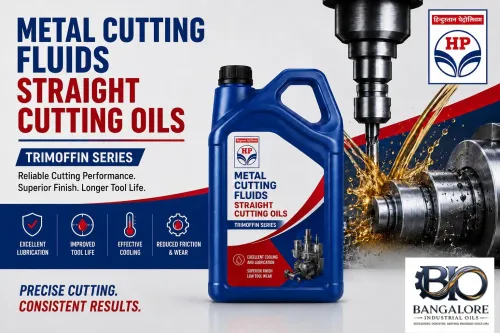
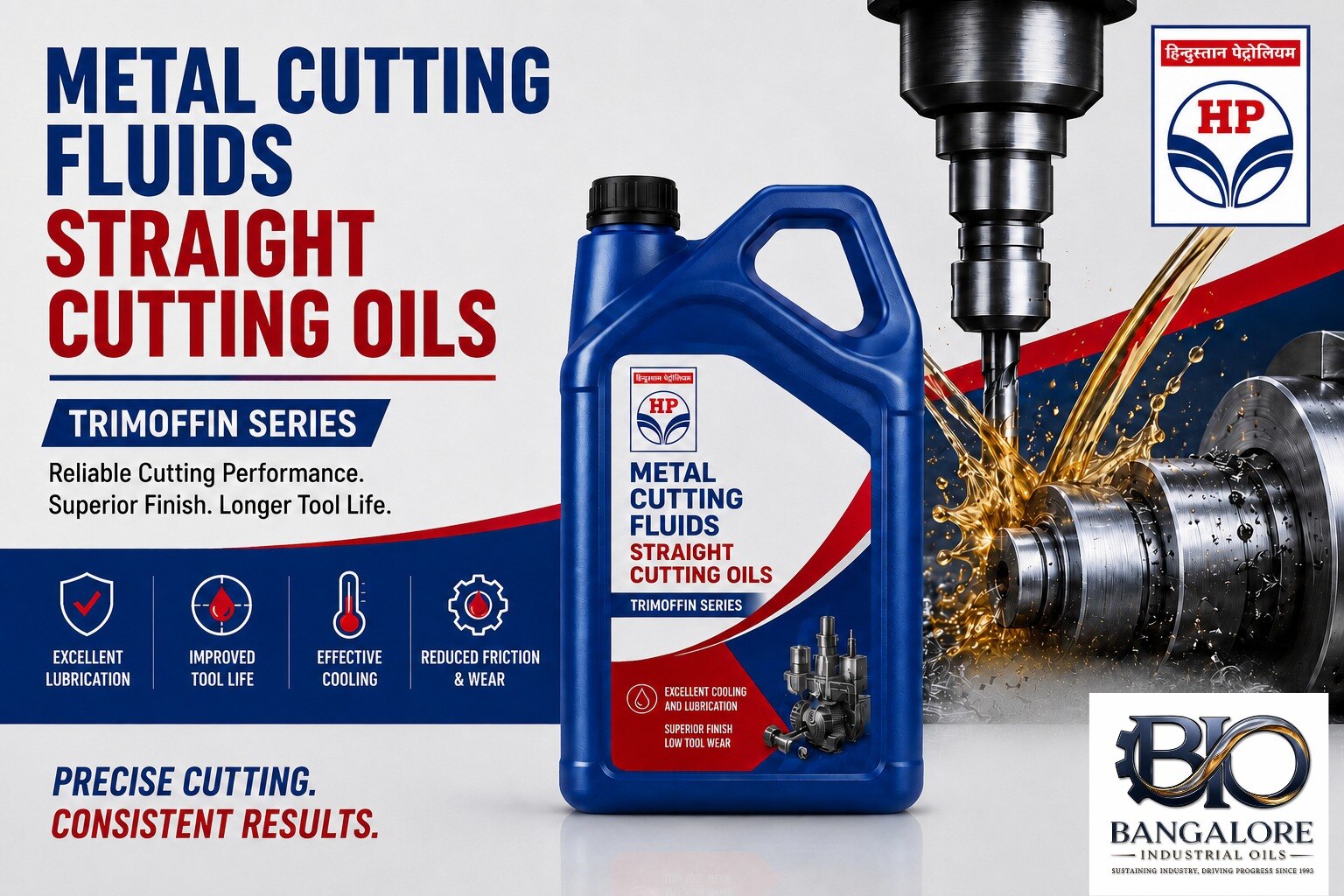
 | METAL CUTTING FLUIDS STRAIGHT CUTTING OILS Searching for reliable Metal Cutting Fluids – Straight Cutting Oils dealers in Karnataka? Bangalore Industrial Oils is a leading supplier offering... View product → |
Frequently asked questions
What does straight cutting oil mean?
Straight cutting oil is a neat, oil-based metal cutting fluid used as supplied rather than mixed with water.
How do you choose a Trimoffin grade?
Match the grade to the machining operation, workpiece alloy, cutting load, tool material, required finish, and the manufacturer’s technical data.
How do you maintain neat cutting oil?
Keep the sump or reservoir clean, remove chips and fines, prevent water ingress, monitor oil level and condition, and replace contaminated fluid.
When is straight cutting oil better than water-based coolant?
Choose straight oil when lubrication, tool protection, and surface finish outweigh its higher mist, fire, housekeeping, and disposal demands.
How can you verify a Trimoffin distributor in Belagavi?
Request sealed original packaging, the product name and grade, batch or lot details, a tax invoice, and evidence that the seller is an HP-authorised distributor.