A rubber process oil can reduce mixing torque, improve filler incorporation and make extrusion smoother, but the wrong grade can cause bleeding, scorch, weak properties or unstable viscosity. You will be able to choose a controlled Elasto trial, set a defensible dosing plan and separate an oil problem from errors in mixing, formulation or equipment.
Key takeaways
- Match the oil to polymer compatibility and the specific processing defect.
- Start with a controlled dosage trial, then compare cure, hardness and dispersion results.
- Reject approvals without a technical data sheet, safety data sheet and batch traceability.
- Keep rubber process oil separate from machinery lubricants and automatic lubrication systems.
Which Elasto grade fits the polymer and processing problem?
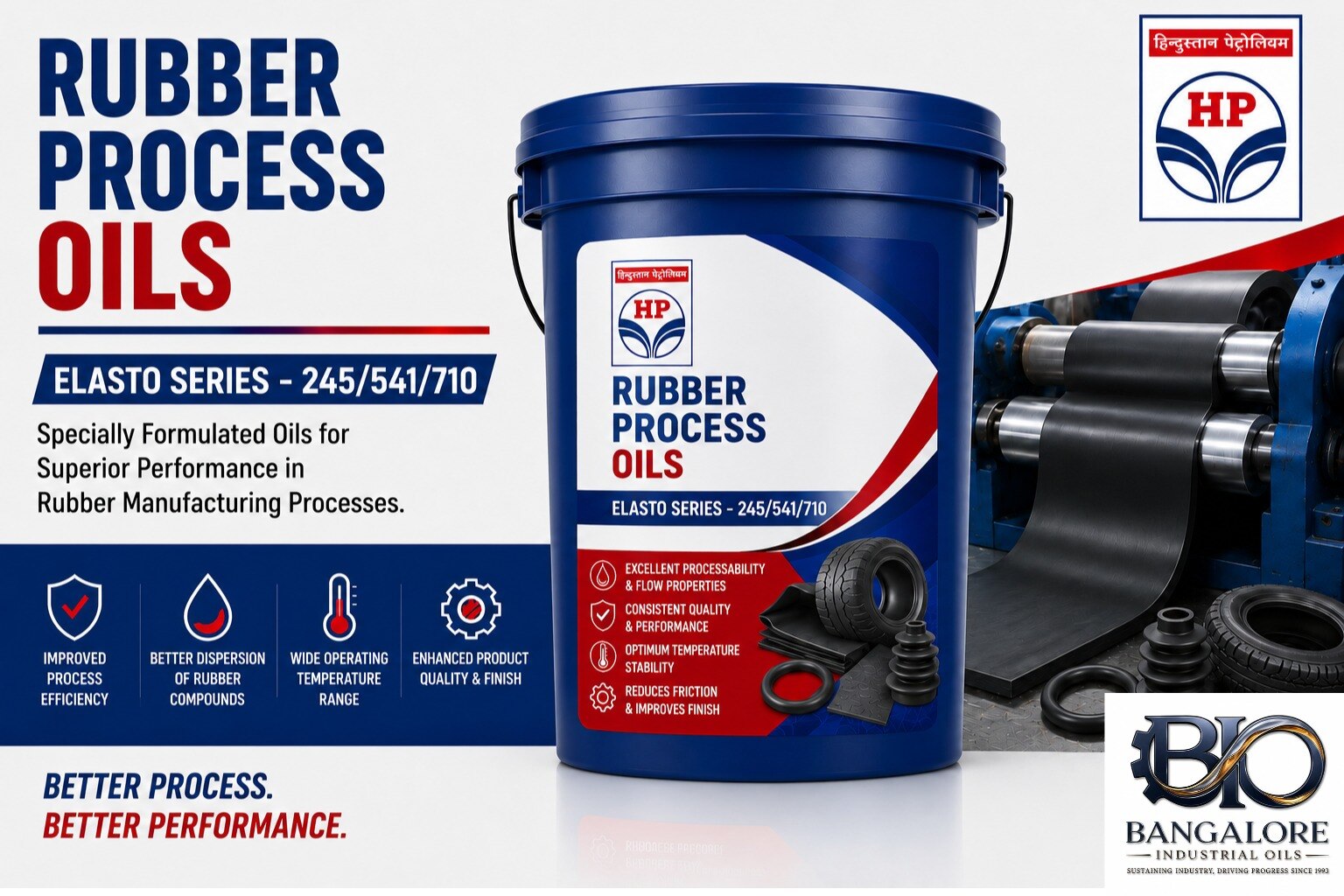
Do not treat Elasto 245, 541 or 710 as viscosity grades. The number identifies a commercial grade; it does not tell you whether the oil suits natural rubber, SBR, NBR, EPDM, neoprene, butyl or a thermoplastic elastomer.
Match the oil to the polymer and compound recipe. Solvency affects swelling, filler interaction and migration; viscosity affects flow and dispersion; volatility affects weight loss; colour affects appearance and contamination risk.
| Grade | What the number tells you | Controlled comparison |
|---|---|---|
| Elasto 245 | Grade identity only, not polymer compatibility | Compare against the current oil at equal phr |
| Elasto 541 | Grade identity only, not viscosity or solvency | Check processing, cure and final properties |
| Elasto 710 | Grade identity only, not a guaranteed defect cure | Check bleeding, hardness, ageing and migration |
Obtain the current technical data sheet and the batch certificate of analysis before selecting any candidate. Check:
- Kinematic viscosity, density, flash point, pour point and volatility
- Aniline point or another stated solvency indicator
- Sulphur and nitrogen contribution where the formulation requires limits
- PAH status, especially for regulated products or consumer-contact applications
- Polymer compatibility after heat ageing and storage
Paraffinic character often suits EPDM and butyl formulations, while naphthenic character offers low-temperature performance and useful solvency. Aromatic character gives stronger solvency but can increase swelling, migration and PAH-related regulatory risk.
A rubber processing oil in Hubballi deserves the same controlled screening: select the grade as a candidate, not as a guaranteed cure for scorch, poor dispersion or extrusion trouble.
How should you dose and mix the oil without creating a new defect?
Start at the formulation’s existing phr and change nothing else. If no baseline exists, run a small step trial at 2, 4 and 6 phr only after the compound designer approves those levels. Record phr as parts per hundred rubber, not as an estimate based on drum weight.
- Keep the polymer, filler, curatives, rotor speed, shear, batch time and discharge temperature constant. Compare each oil level with the current compound, or the result cannot be attributed to the oil.
- Choose the addition point from oil absorption, filler loading, polymer and equipment. Add readily absorbed oil during mastication or internal mixing after the polymer has broken down; add oil gradually during filler incorporation when the filler needs wetting. Use a two-roll mill only when the mill procedure permits it, and introduce the oil in a controlled stream rather than pouring it onto one spot.
- Prevent pooling by keeping the rotors or rolls turning while the oil enters. Pooling produces uneven plasticity, poor filler dispersion and oily specks. Follow the mixer’s approved rotor speed and shear settings instead of increasing speed to shorten the batch.
- Track batch time and dump temperature for every trial. Excess heat can trigger premature scorch or drive off volatile material, while an early discharge leaves the compound non-uniform. Discharge only after the batch reaches a repeatable temperature and appearance.
Give the rubber process oil supplier the target polymer, approved phr range and equipment details. Ask for handling guidance tied to that formulation, then confirm the result with Mooney and cure testing rather than judging softness by hand.
What should improve—and what signals that oil is masking another fault?
Lower Mooney viscosity and easier flow indicate a useful processing gain only when filler incorporation, extrusion or calendaring improves without damaging cured properties. Higher oil loading usually lowers hardness and modulus, and can reduce tensile strength, abrasion resistance or compression-set performance.
- Compare the candidate with the current oil at equal phr, polymer, carbon-black and other filler loading, curative package, mixing sequence, rotor speed, batch time and dump temperature.
- Measure Mooney viscosity, cure time and torque, then test hardness, tensile strength, elongation, abrasion and compression set as applicable.
- Inspect extrudate and calendered sheet, then repeat key checks after heat ageing and storage. Do not approve a rubber processing oil in Hubballi by feel, gloss or easy mixing alone.
| Symptom | Check before changing oil | What it may reveal |
|---|---|---|
| Tackiness or blooming | Oil level, filler moisture, cure-system dosage | Excess oil, wet filler or undercure |
| Poor dispersion | Carbon-black loading, addition sequence, mixing temperature and time | Inadequate shear or premature discharge |
| Scorch | Rotor or mill temperature, batch time and accelerator or sulphur errors | Overheating or cure-system error |
| Surface defects | Roll-gap setting, mill wear and filler moisture | Mechanical or moisture-related fault |
| Variable batch viscosity | Oil batch, weighing, carbon-black loading and mixing temperature | Dosing or raw-material variation |
| Calendaring tears | Roll gap, roll temperature, compound temperature and mill wear | Poor nip control or weak compound |
| Difficult extrusion | Mooney viscosity, die temperature, filler loading and dispersion | Flow mismatch rather than insufficient oil |
A lower Mooney reading is not proof that Elasto oil solved the fault; matching flow with retained strength and compression performance is the real test.
What evidence should you require before approving an Elasto oil?
Approve an Elasto oil only after a controlled comparison proves that it improves the compound without damaging cured performance or storage stability.
1. Run a side-by-side trial against the current oil. Keep phr, polymer, filler, curative package, rotor or mill settings, batch time and mixing sequence identical. Change only the process oil, and record the actual batch and drum used.
2. Test the uncured and cured compound. Measure Mooney viscosity and rheometer cure time and torque, then check hardness, tensile strength, elongation, abrasion resistance or compression set as the application requires. Inspect extrusion output, calendared surfaces and visible defects.
3. Repeat key checks after heat ageing and storage. Record changes in hardness, tensile strength, elongation, viscosity, colour, tack, blooming and migration; an oil that processes well on day one can create a surface or performance problem later.
4. Require a procurement file for every delivery: manufacturer, grade, batch number, manufacture date, quantity, technical data sheet, safety data sheet and certificate of analysis. The CoA must identify the same drum batch you are approving, not merely the same commercial grade.
5. Retain a sealed reference sample from the approved drum. It gives you a direct comparison if a later lot shows different viscosity, colour or migration. Before use, inspect drums for water, sediment, skin, abnormal odour and damage.
A rubber process oil supplier should provide this traceability. Bangalore Industrial Oils may be relevant as an authorised channel for Elasto documentation, but authorisation does not replace application testing or polymer-specific technical review. General purpose machinery oil dealers are not automatically qualified for this work.
Related product
 | RUBBER PROCESS OILS Searching for trusted Rubber Process Oils dealers in Karnataka? Bangalore Industrial Oils is a leading supplier offering premium-quality rubber... View product → |
How do you avoid confusing rubber process oil with machinery lubricant?
Yes, Elasto oil can solve a defined rubber-processing issue, but it is not a machinery lubricant. Rubber process oil is a compounding ingredient selected for polymer compatibility, swelling, solvency, volatility and colour. General-purpose machinery oil is selected for equipment lubrication, wear protection, oxidation control and demulsibility.
Substituting either product can damage equipment or disrupt compound performance.
Specify the material clearly before requesting quotations:
- Search for “rubber compounding oil” or “rubber process oil supplier in Hubballi,” and name the target polymer—natural rubber, SBR, NBR, EPDM, neoprene, butyl or a thermoplastic elastomer—plus the application.
- Specify gears, hydraulics, bearings or compressors separately. State the required viscosity grade, lubricant family, operating-temperature range, load, speed, contamination conditions and OEM approval.
- Treat the phrase general purpose machinery oil dealers for elasto in hubballi as a broad search, not a technical specification. It can return retail lubricant sellers who stock machine oil but cannot recommend a compound ingredient.
- Request the current TDS, SDS and batch CoA, then confirm the supplier can support compound testing and traceability. Check the manufacturer, grade, batch number, manufacture date and quantity on each drum.
A machinery-oil dealer may supply genuine, in-date lubricant and still lack formulation expertise. Approve Elasto only after matching the formulation and running controlled validation against the current oil at the same phr, polymer, filler, curative package and mixing conditions.
Frequently asked questions
Which Elasto grade fits the polymer and processing problem?
Do not select Elasto 245, 541 or 710 from the number alone. Match the supplier’s technical data and compatibility evidence to the polymer—such as natural rubber, SBR, NBR, EPDM, neoprene, butyl or a thermoplastic elastomer—and the defect you need to correct.
How should you dose and mix Elasto oil without creating a new defect?
Set a measured trial dosage against the rubber compound’s formulation, add the oil at a defined mixing stage, and compare torque, temperature, dispersion, cure time, hardness and tensile results with the control batch. Avoid unrecorded additions during production.
What should improve, and what signals that oil is masking another fault?
Look for easier processing, improved filler dispersion and the target hardness or flow without unacceptable changes in cure or strength. Persistent scorch, poor dispersion, surface blooming, abnormal cure or batch variation points to a formulation, temperature, equipment or weighing fault rather than an oil problem.
What evidence should you require before approving an Elasto oil?
Request the product technical data sheet, safety data sheet, certificate of analysis or batch test record, manufacturing batch number, packing details and a controlled compound-trial report. Confirm that the documents identify the exact commercial grade and intended rubber-processing use.
How do you avoid confusing rubber process oil with machinery lubricant?
Check the product label, technical data sheet and application statement. Rubber process oil is an ingredient or processing aid for a compound; machinery lubricant is selected for gears, bearings, hydraulics or other lubricated components and must not be substituted without equipment and lubricant compatibility approval.