A rubber process oil does not simply arrive at a factory and enter the mixer; its identity, storage condition, addition point and dosage affect every stage from mastication to curing. By following the material and recording the right checks, you can prevent wrong-grade loading, uneven dispersion and an unapproved change in compound performance.
Key takeaways
- Quarantine shipments when the purchase order, label and certificate do not match.
- Add process oil gradually during mixing to prevent pooling and uneven dispersion.
- Select ELASTO 245, 541 or 710 against your compound and processing requirements.
- Record batch, quantity, grade and certificate details from receipt through finished rubber.
Where the oil enters the rubber production flow
1. The oil enters the rubber flow at receipt, where you inspect the drum or tank seal, container damage, label, grade, batch number, quantity, visible water or sediment, and certificate of analysis. A mismatch between the purchase order, label and certificate is a release hold.
2. Store the closed container in a clean, dry, clearly identified area away from ignition sources and contamination. Record the lot before allocating it to a production batch. For ELASTO 245 in Mysuru, retain the grade and batch reference through every transfer.
3. In the formulation room, weigh the oil by mass against the approved recipe. Break down the polymer during mastication before adding oil; early addition can increase slippage and delay breakdown. Add the measured quantity during internal mixing at the recipe-defined point, then continue until the oil is absorbed and the filler is dispersed.
4. Move the compound to milling or extrusion. Temperature, pressure and output stability expose changes in processing, while calendaring requires a uniform surface without excessive tack or oil bleed. During curing, monitor cure response rather than assuming the oil is chemically neutral.
5. Release the batch only after final inspection covers the product’s required dimensions and surface condition, plus hardness, tensile strength, elongation and compression set where specified. The batch record must link the delivered grade and batch to the tested finished product; without that link, the flow is incomplete.
How to add process oil without pooling or uneven dispersion
Add process oil only after the polymer reaches its planned mastication state. Begin with the approved formulation, mixer capacity, polymer mass and target dosage; use a rubber-process oil, not an engine lubricant or unapproved substitute.
1. Weigh the oil on a calibrated scale. Do not convert litres to kilograms unless the current density is known and the conversion is documented. Confirm the grade and batch before charging it.
2. In an internal mixer, add the oil as a controlled stream or measured portions at the specified ram position, rotor condition and compound temperature. A fast discharge can form a lubricated pocket; an overly slow feed extends the cycle and adds unnecessary heat.
3. Keep the polymer and filler moving enough to capture the liquid. Check the chamber wall, ram and dump door for oil, then inspect the mill roll after transfer. Collection indicates poor timing, excessive dosage, low compound movement or inadequate mixing.
4. Record addition time, oil mass, compound temperature, rotor speed, ram pressure and mixing energy where available. For Elasto 541 in Mysuru or any other approved grade, keep these records with the batch identification.
5. On a mill, use the same nip setting and folding sequence for every batch before extrusion or calendaring. Do not add filler to hide a visible oil pocket; hold the batch, inspect the mix and identify the cause before release.
If oil appears on the equipment, stop treating the problem as a minor adjustment. Check dosage, addition timing, temperature and movement against the formulation, then document any correction through an approved formulation decision.
How to choose between ELASTO 245, 541 and 710
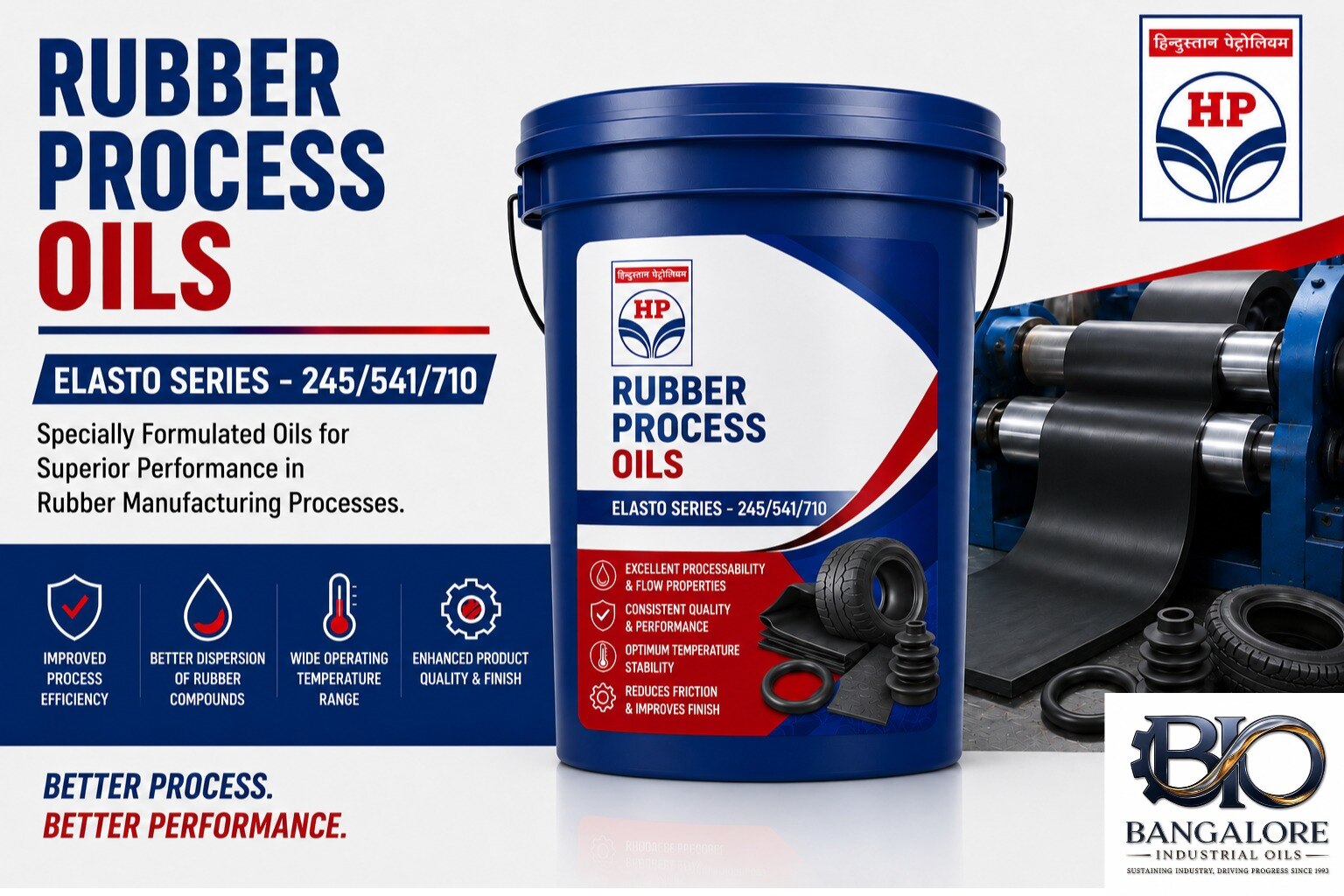
Start with the polymer, not the oil name: natural rubber, SBR, NBR, EPDM and reclaimed rubber can respond differently to the same process oil. Treat ELASTO 245, ELASTO 541 and ELASTO 710 as separate grades, not interchangeable names.
| Grade | Compare on the current HPCL technical data sheet | Relate the values to |
|---|---|---|
| ELASTO 245 | Kinematic viscosity at the stated test temperature, density, flash point, pour point, aromatic content where supplied, aniline point or another solvency indicator, colour, water and sediment | Polymer compatibility, filler dispersion, hardness and surface finish |
| ELASTO 541 | The same grade-specific figures and release limits; do not substitute generic rubber-oil data | Pumping, tack, extrusion behaviour and processing temperature |
| ELASTO 710 | The same figures, batch documentation and applicable specification | Finished-product use, cured properties and oil-bleed risk |
A higher viscosity can hinder pumping and dispersion; a lower viscosity can change surface finish and compound movement. Solvency data helps you assess polymer and filler interaction instead of judging compatibility from appearance.
Run a laboratory trial with the exact elastomer blend, filler system, reclaimed-rubber content, target hardness and oil dosage. Record mixing behaviour, extrusion stability, tack and cured properties before approval.
Request the current grade-specific sheet before approving ELASTO 245 in Mysuru or ELASTO 541 in Mysuru. Use the stated flash point as a handling and fire-safety control, not as proof of authenticity. Select the grade that satisfies both processing and finished-product requirements, rather than the grade available first.
What dosage changes in mixing, curing and finished rubber
Approve a dosage or grade change from measured trial data, not mixer feel. More process oil usually lowers Mooney viscosity and mixing power, improves flow and eases extrusion; excess oil can lower hardness, tensile strength, modulus or compression-set performance and increase tack, bleed or surface defects.
Too little oil raises power demand, restricts filler dispersion and causes rough extrusion or calender marks.
Run a control and trial compound under identical mixer conditions. Record polymer identity, filler package, curatives, oil grade, oil mass and addition point. Measure Mooney viscosity with the same method, temperature and specimen preparation, then compare the cure curve before copying any cure schedule.
Compare these results:
| Measure | More oil | Too little oil |
|---|---|---|
| Mooney viscosity and power | Lower values; easier flow | Higher values; heavier mixing |
| Cure curve | Scorch time, cure time or torque may shift | Distribution changes can also shift cure |
| Finished rubber | Possible lower hardness, tensile strength or modulus; tack or bleed | Poor dispersion, rough surface or calender marks |
After mixing, mould or otherwise process representative test pieces and inspect hardness, tensile strength, elongation, compression set, dimensions, surface, tack and oil bleed against the product specification. Approve the change only when every required limit is met.
- Record the complete formulation and retain control and trial samples.
- Compare scorch time, cure time and minimum and maximum torque from the cure curve.
- Confirm the oil remains a rubber formulation ingredient, not a preventive oil or finished-product engine lubricant.
Ask rubber process oil suppliers in Mysuru for the current grade specification before substitution. Never replace a process oil with an engine-oil grade because the liquids look alike; cure behaviour and cured properties can change.
How Mysuru receipt and supplier paperwork protect traceability
Traceability starts before the tanker or drums reach your plant: follow the chain from designated depot receipt through inspection, batch identification, clean storage, order allocation, loading, transport and delivery. Every transfer adds a chance of wrong-grade loading or contamination.
1. Inspect the tank or drums for seal condition, damage, clean closures, correct label, grade, batch number and quantity. For bulk unloading, verify identified connections, clean hoses, line-clearance records and a controlled pump procedure. Avoid repeated pumping and drum decanting.
2. Match the grade and batch reference across the purchase order, manufacturer label, delivery document, certificate of analysis and retained sample. Record the lot before releasing it to production, and keep containers closed in a clean, dry, identified area away from ignition sources and contamination.
3. Request the current SDS for hazards, storage, spill response and transport information. Do not use it instead of the technical data sheet or batch certificate: the SDS does not prove that a particular batch meets your formulation specification.
4. Before approving Elasto 245 or Elasto 541, confirm current product-relevant HPCL principal documentation, pack or bulk quantity, minimum order, lead time, transport condition, retained-sample policy and off-specification procedure. Separate HPCL’s manufacturer or principal role from the clearing-and-forwarding party holding custody and the local seller issuing the invoice.
Searches such as car engine oil dealers hp, car engine oil dealers hp elasto rubber process oil in mysuru and rubber process oil suppliers in mysuru can mix automotive and industrial channels. Automotive dealership status alone proves no Elasto authorisation.
Bangalore Industrial Oils is relevant only when it supplies this traceable grade, batch and authorisation paperwork.
Related product
 | RUBBER PROCESS OILS Searching for trusted Rubber Process Oils dealers in Karnataka? Bangalore Industrial Oils is a leading supplier offering premium-quality rubber... View product → |
Frequently asked questions
Where does rubber process oil enter the production flow?
It enters at receipt, where you inspect the seal, container, label, grade, batch number, quantity, visible contamination and certificate of analysis before release.
How do you add process oil without pooling or uneven dispersion?
Confirm the compound mixing sequence, meter the oil gradually at the specified stage, and allow enough mixing time for uniform incorporation instead of pouring it into one spot.
How do you choose between ELASTO 245, 541 and 710?
Compare the grade documents with your rubber compound, polymer compatibility, required softness, processing behaviour and finished-product performance before selecting a grade.
What records protect traceability for rubber process oil received in Mysuru?
Keep the purchase order, delivery document, drum or tank identification, batch number, quantity, certificate of analysis, inspection result and production batch link.