Monsoon humidity, condensation from short test runs, dusty air, changing loads and long standby periods can alter generator oil without any dramatic fall in ambient temperature. By the end, you will be able to connect symptoms to likely causes, check oil safely, select the required viscosity and performance category, and verify whether a product suits your engine.
Key takeaways
- Run generators under proper load; ten-minute no-load tests encourage fuel dilution and condensation.
- Inspect oil for rising level, diesel smell, milky colour, sludge, and unusual viscosity.
- Match 15W-40, 20W-40, 10W-30, or 5W-40 to the engine manual and climate.
- Verify API rating, SAE grade, batch number, seal, and supplier documentation before purchase.
Why Bengaluru’s seasons create generator oil problems
Long standby periods are Bengaluru’s biggest seasonal trigger, not cold weather alone. A diesel generator that runs for ten minutes without load during weekly testing never reaches stable combustion temperature. Unburned fuel can enter the sump, while moisture from monsoon air condenses inside the crankcase and fuel tank.
The result is fuel dilution, rising oil level, diesel odour, sludge or foaming.
| Local condition | What happens | Symptoms you see |
|---|---|---|
| Monsoon humidity and condensation | Water contaminates oil and promotes corrosion | Foaming, milky deposits, bearing or valve-train rust |
| Dusty intake air | Soot and abrasive dirt enter through poor filtration | Dark oil, faster wear, increased oil consumption |
| Short unloaded runs | Incomplete combustion creates soot and unburned fuel | White or black smoke, rising oil level, falling viscosity |
| Cooler morning starts | Thick oil turns the engine slowly before pressure builds | Hard starting, slow cranking, delayed oil pressure |
| High ambient heat or heavy load | Oxidation accelerates and oil thickens with deposits | Low oil pressure, high oil temperature, sludge |
| Rapid load changes | Combustion and oil temperature swing sharply | Smoke, unstable pressure, increased consumption |
A restricted filter can imitate an oil problem: its bypass valve may open, sending less-filtered oil around the element. Check the filter part number, gasket, anti-drainback behaviour and actual pressure before blaming the season.
Dark oil alone does not prove failure. High soot can thicken it, while diesel dilution thins it; humidity does not automatically justify replacing 15W-40 with a thinner grade. These generator oil seasonal problems require checking the manual, load pattern and oil condition together.
How to inspect oil before and after monsoon standby
Before monsoon standby, inspect the oil, filter and engine; after standby, repeat the checks before returning the generator to service.
1. Record engine hours, last oil-change date, oil grade and sump level. Calendar age matters: condensation, combustion by-products and oxidation can consume corrosion protection and reserve alkalinity even when standby hours are low. Follow the engine maker’s maximum calendar interval, not only its hour limit.
2. Check the dipstick for a rising level, fuel smell, milky colour, sludge, foam or water beads. A rising level points to fuel or water entering the sump; milky oil indicates water contamination. Do not correct the level by draining a little and continuing to run the engine.
3. Replace the filter at the specified service point and verify its exact part number. Inspect the gasket, mounting face, anti-drainback valve and drain-back time. A restricted or incorrect filter can open the bypass valve, change oil pressure and circulate less-filtered oil.
4. Before starting, inspect the breather, sump plug, oil lines, coolant leaks, air filter and intake for dust or rain entry. After starting, record cranking time, oil pressure, coolant temperature, smoke, load percentage and leaks. Stop if pressure stays below the engine maker’s limit.
Send a clean, mid-sump sample for viscosity, water, fuel dilution, soot, oxidation, nitration, wear metals and base-number reserve. Change viscosity only when the engine manual, starting temperature, pressure behaviour or oil analysis supports it; monsoon humidity alone does not justify replacing 15W-40.
How to choose between 15W-40, 20W-40, 10W-30 and 5W-40
Choose the viscosity listed for your exact engine model in the manufacturer’s manual, then confirm the required API category, ACEA category or OEM approval. SAE J300 separates cold-start behaviour from hot viscosity: “15W” or “5W” describes cranking and pumping performance at low temperature, while “40” describes viscosity at 100°C.
| Option | What the grade means | Use it when |
|---|---|---|
| 15W-40 | 15W cold performance; 40-grade hot viscosity | The manual specifies it and the generator faces normal Bengaluru starting temperatures and sustained load |
| 20W-40 | Weaker cold performance than 15W-40; the same 40-grade hot viscosity | The manual permits it and starting temperature, cranking speed and oil-pressure behaviour remain acceptable |
| 10W-30 | Better cold flow with a thinner 30-grade hot viscosity | The manual approves it for the engine’s load, clearances and operating temperature |
| 5W-40 | Strong cold-start performance with 40-grade hot viscosity | The manual permits it, especially where cold cranking is difficult or temperatures vary widely |
Do not change from 15W-40 only because of monsoon humidity. Water contamination requires investigation; it does not automatically justify thinner oil. Check load percentage, coolant temperature, oil pressure and starting behaviour before changing grade.
A search for “milcy power 15w40 in bengaluru” does not prove suitability. Compare its current technical-data sheet with the manual, including API performance level, diesel use, approvals or claims, batch traceability and compatibility with DPF or other emissions hardware. Record oil-analysis trends before approving a substitution.
How to distinguish oil degradation from an engine fault
A rising oil level is never a useful reserve: fuel dilution from injectors, the fuel pump or worn rings, and coolant or water contamination can all raise it. Draining the excess without finding the source leaves the fault active.
| Symptom | Evidence pointing to oil or operating conditions | Evidence pointing to a mechanical fault |
|---|---|---|
| Blue smoke | Oil level falling, high oil consumption, or a blocked air filter | Smoke persists with correct level and clean intake; suspect turbocharger seals, rings or valve guides |
| White smoke | Water in the sample, coolant loss, or poor combustion during cold running | Continued smoke after warm-up with coolant loss; investigate head gasket, injector or compression |
| Black smoke | High load, wet stacking, restricted intake or soot-loaded exhaust | Smoke continues at normal load after filter and injector checks |
| Rising oil level | Diesel odour, falling viscosity, or water and coolant in laboratory analysis | Rising level with no contaminant points to an incorrect fill or measurement error |
| Low oil pressure | Diluted oil, a clogged filter, low level, or pressure falling only when hot | Pressure remains low with correct oil; check gauge, pump, relief valve, bearings and clearances |
| Dark oil | Soot, oxidation or detergent action; colour alone proves little | Metal particles, abnormal wear metals or rapid thickening indicate internal damage |
- Record oil level, pressure, load, coolant temperature, smoke, fuel use and operating hours at each run.
- Take a clean, mid-sump sample before changing oil. Test viscosity, fuel dilution, water, soot, oxidation, nitration and wear metals.
- Compare the trend with the engine maker’s limits and laboratory interpretation. Replace a restricted filter, correct loading or repair the failed component; do not substitute spray lubricant for crankcase oil.
How to verify generator oil and avoid the wrong lubricant purchase
A label saying “hp generator oil” does not prove compatibility. Before buying, identify the generator model, engine model, required SAE grade, API or ACEA category, OEM approvals, sump capacity and service interval in the engine manual.
1. Record the exact requirement, including emissions-control hardware. Do not substitute 15W-40, 20W-40, 10W-30 or 5W-40 because the weather changed; Bengaluru humidity does not by itself require thinner crankcase oil.
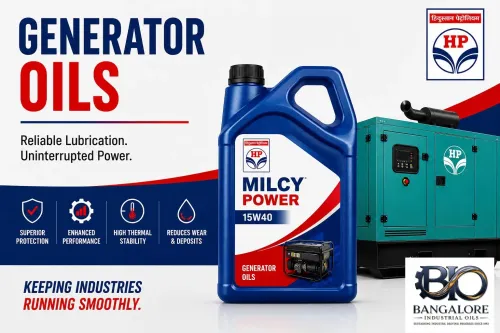
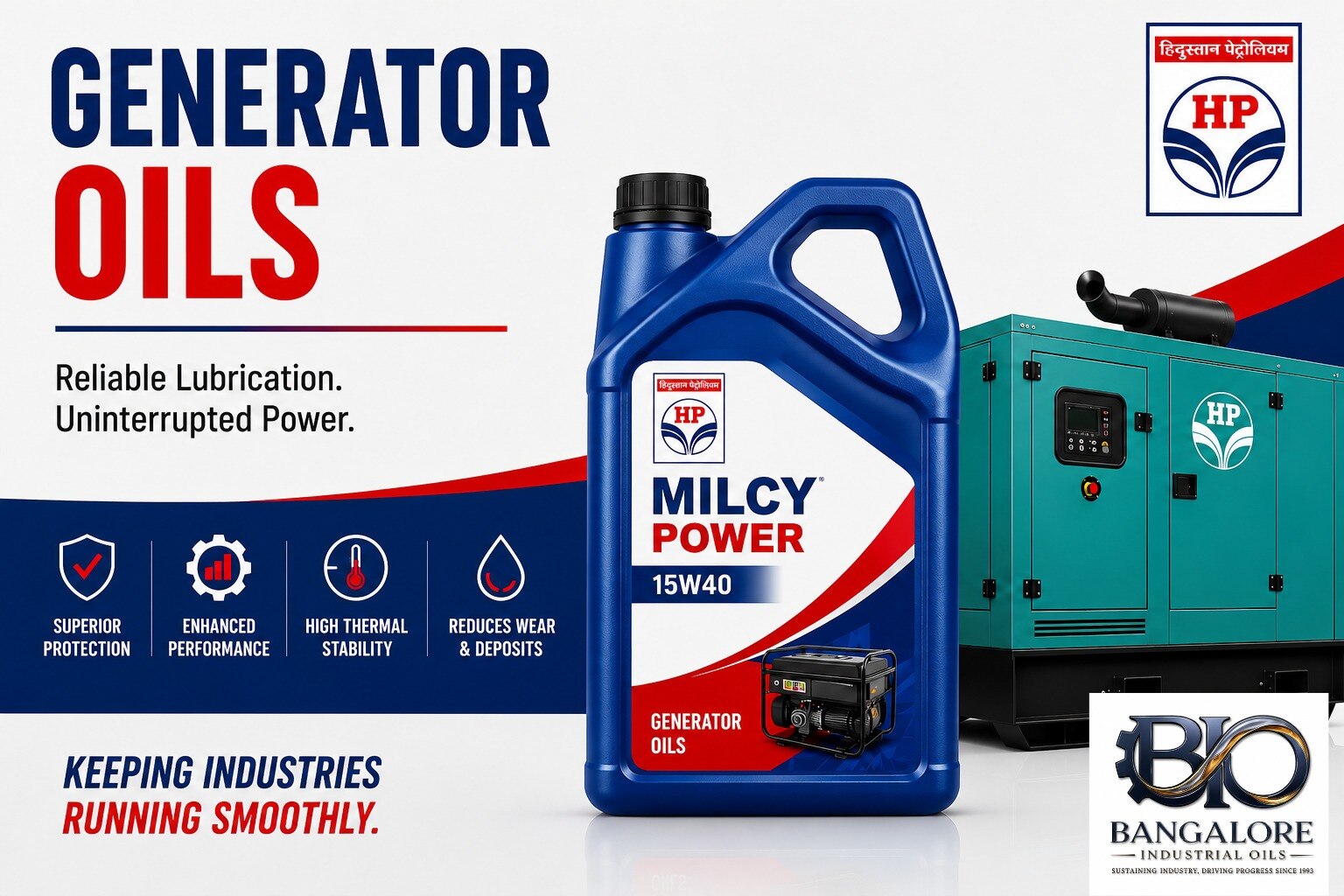
2. Match the product’s current technical-data sheet to the manual. For Milcy Power 15W40 in Bengaluru, check its stated API performance level, diesel-engine application, approvals or claims, and compatibility with the engine’s after-treatment system.
3. Ask the supplier for the sealed pack, batch number, manufacture date, storage guidance and an invoice identifying the product. Reject containers with broken seals, missing traceability or labels that do not match the technical-data sheet.
4. Confirm both limits on the service schedule: engine hours and maximum calendar time. Standby oil can accumulate condensation, fuel dilution, soot and oxidation even when the generator has run for few hours.
5. Separate spray products from sump oil. A search for “lubricant spray dealers aerol” or “lubricant spray dealers aerol generator oil problems in bengaluru” can lead to aerosol products for terminals, hinges or corrosion protection; they cannot replace crankcase oil.
When buying through Bangalore Industrial Oils, request the technical-data sheet and batch details before accepting a substitute, rather than relying on the dealer’s product name alone.
Related product
 | GENERATOR OILS Bangalore Industrial Oils is a trusted dealer of MILCY POWER 15W40 Generator Oil, offering premium lubrication solutions designed specifically for... View product → |
Frequently asked questions
Why do Bengaluru seasons cause generator oil problems?
Long standby periods, short no-load tests, monsoon humidity, condensation, and unburned fuel can degrade or dilute crankcase oil.
How should you inspect oil before and after monsoon standby?
Check the level on a level engine, smell for diesel, look for milky oil or sludge, inspect the filler cap, and record changes before restarting.
How do you choose between 15W-40, 20W-40, 10W-30, and 5W-40?
Use the generator manufacturer’s manual first, then match the specified SAE grade and API performance category to starting temperature and operating conditions.
How can you distinguish oil degradation from an engine fault?
Oil that smells of diesel, rises on the dipstick, turns milky, or thickens with sludge points to contamination; smoke, low compression, leaks, and abnormal noise require engine diagnosis.
How do you verify generator oil before buying it?
Confirm the SAE grade, API category, intended diesel-engine use, sealed packaging, batch number, manufacturing details, and supplier documents such as the Form 20B licence copy when applicable.