The numbers 11, 22, 32 and 44 associated with Meta Quench should not be read as cooling-rate ratings. By the end, you will know how to compare the grades using viscosity, cooling curves and operating conditions, then match the evidence to your steel, equipment and procurement requirements.
Key takeaways
- Treat 11, 22, 32 and 44 as grade identifiers, not cooling-speed rankings.
- Compare ASTM D445 viscosity at 40 °C and ASTM D6200 cooling curves.
- Match cooling severity to steel grade, section thickness and distortion risk.
- Check tank agitation, temperature control, contamination and oil condition before changing grades.
What the Meta Quench 11, 22, 32 and 44 grades actually tell you
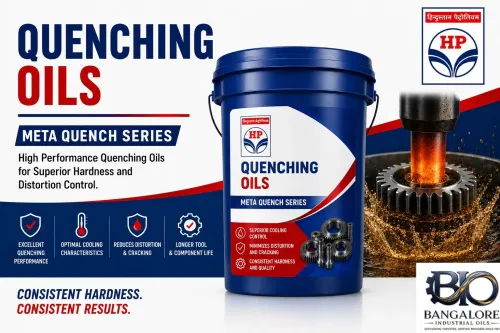
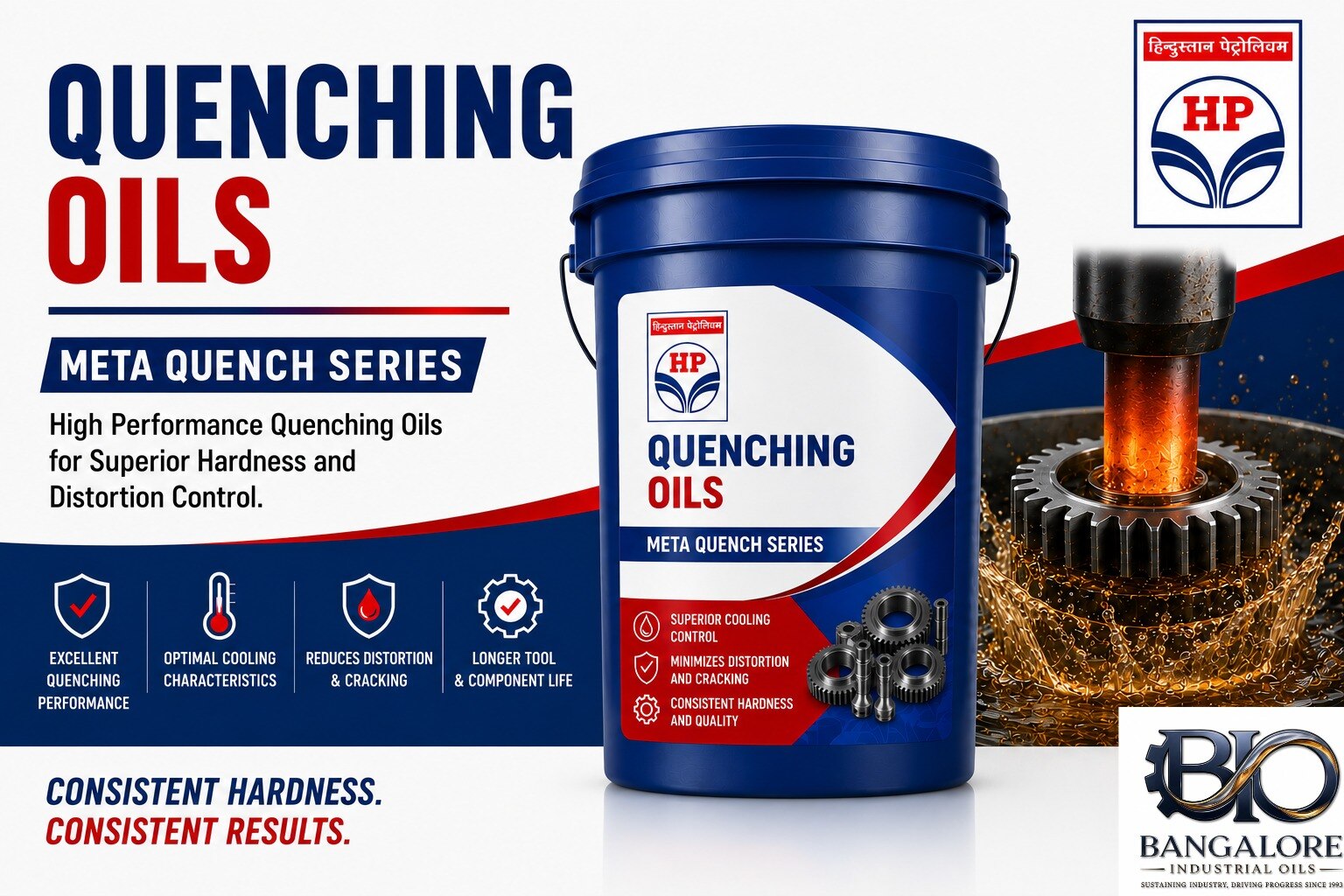
The numbers 11, 22, 32 and 44 are nominal Meta Quench grade identifiers, not a built-in ranking of quenching speed. Treat them as starting points for comparison: confirm each grade’s current kinematic-viscosity range at 40 °C under ASTM D445, then compare its cooling curve under ASTM D6200.
| Grade | What you can infer | What you must not infer |
|---|---|---|
| Meta Quench 11 | A nominal grade designation; verify the current viscosity range | That it is automatically the fastest quenchant |
| Meta Quench 22 | A nominal grade designation for comparison with the current TDS | That it delivers twice the cooling rate of grade 11 |
| Meta Quench 32 | A nominal grade designation whose viscosity limits need confirmation | That it suits a thicker section or a particular steel without testing |
| Meta Quench 44 | A nominal grade designation requiring the same checks | That the highest number means the slowest or safest cooling |
Compare the actual viscosity result, cooling rate through the critical temperature regions, bath temperature and agitation conditions. Cooling-curve evidence beats viscosity alone because two oils with similar viscosity can remove heat differently.
Ask quenching oil wholesalers hp for the current product data sheet, batch certificate, sealed original pack, batch number, manufacture date, viscosity result and water result. “Equivalent” and “same grade” claims prove nothing without cooling-curve or laboratory evidence. Confirm the document revision too: product formulations, labels and viscosity limits can change.
Dark colour alone does not establish that any grade has failed; track viscosity, flash point, sludge, acid number, water and cooling-curve changes over time.
Match cooling severity to steel, section thickness and distortion risk
Carbon steel usually needs the most severe cooling that achieves core hardness without cracking. Thin sections can tolerate a fast quench; thick sections often need alloy steel or a different hardening route because faster oil raises residual stress without guaranteeing through-hardening.
| Workpiece | Suitable Meta Quench characteristic | Main decision |
|---|---|---|
| Carbon steel | Fast cooling for thin sections; controlled medium cooling for thicker or crack-sensitive parts | Increase severity only when hardness testing shows the centre is under-hardened |
| Alloy steel | Medium or slow cooling curve | Use the steel’s higher hardenability to reduce distortion and dimensional change |
| Tool steel | Slow, uniform cooling with low agitation | Protect sharp edges, corners and complex profiles from cracking |
| Bearing steel | Controlled medium-to-slow cooling with stable heat extraction | Limit distortion and retain consistent hardness around races and rolling surfaces |
| Non-ferrous workpieces | Low-severity oil where the alloy and procedure specify oil quenching | Confirm that oil is suitable; many aluminium and copper treatments use water, polymer or air instead |
Compare Meta Quench options by cooling curves, not viscosity or the grade number. ASTM D6200 data show how quickly the oil cools through the high-temperature vapour, boiling and convection regions. Record bath temperature and agitation with every comparison; a cold, static tank does not reproduce an agitated production tank.
A curve that looks faster is not automatically better. It can increase cracking, warpage and size change, while an oil that is too slow can leave carbon steel below target hardness. Ask quenching oil distributors hp for curves tested under conditions matching your tank, load and operating temperature.
Run the quench tank as a controlled process, not a bucket of oil
A repeatable quench begins before hot steel reaches the oil: control the austenitising temperature, transfer time, bath temperature, agitation and load every cycle. A cooling curve without its oil temperature and agitation conditions cannot reliably compare Meta Quench grades.
1. Heat each load to the qualified austenitising temperature and soak time for its steel and section size. Record furnace temperature and load identification; overheating changes grain size and hardness before quenching begins.
2. Transfer the load by the same route and within the same elapsed time. Delayed transfer lets the surface cool, while a different entry angle changes vapour-film formation and produces uneven cooling.
3. Hold the bath within the validated operating-temperature range, and record the temperature immediately before and during quenching. Set pump speed, flow direction and immersion depth; stagnant oil and air entrainment change the cooling curve.
4. Keep load mass, basket design, component spacing and load-to-oil ratio consistent. Fully immerse parts without allowing them to touch the tank, basket or one another; crowded loads trap hot oil around surfaces.
5. Keep water, wash fluid, tempering oil, chips and scale out of the tank. Skim the surface, filter circulating oil and separate incompatible oils before topping up. Test for water rather than relying on clear appearance; water can cause foaming, violent vapour formation and fire.
6. Log steel grade, section size, furnace temperature, transfer time, bath temperature, agitation, load and cooling result. Use ASTM D6200 cooling-curve tests only when the test conditions match the production tank.
Check tank equipment and oil condition before changing grades
A new Meta Quench grade will not deliver its expected cooling curve if the tank still contains carryover from washing, tempering or machining. Establish compatibility from the selected grade’s current TDS and a trial under your actual bath temperature, agitation and transfer time—not from viscosity alone.
1. Check the tank volume, working level, baffles and drainability against the required load and circulation rate. Remove sludge and old oil completely; separate incompatible oils instead of topping up.
2. Confirm that the pump can provide stable flow at the oil’s operating viscosity and that its seals, bearings and materials suit quenching oil and the bath temperature. Record agitation speed or flow rate during the trial.
3. Check the filter housing, element material, bypass setting and rated flow. A restricted filter reduces circulation; an overloaded element sends debris back into the bath.
4. Verify the heater’s control range, thermostat location and surface loading. Local overheating can oxidise the oil even when the average tank temperature looks acceptable.
5. Confirm that the cooling coil has enough heat-removal capacity for the charge size and process speed, with compatible coil material and leak protection. Water entering the bath creates a serious fire and quality hazard.
6. Sample the existing oil before replacement and record viscosity, flash point, water, acid number, insolubles or sludge and cooling-curve behaviour. Dark colour alone does not prove failure.
Run ASTM D6200 cooling-curve tests on the replacement oil at the same oil temperature, agitation and probe conditions used in production. Trend the results after installation; a one-time acceptance test cannot reveal gradual contamination or ageing.
Specify evidence when buying Meta Quench from an HP supplier
Do not approve a Meta Quench purchase from a label or viscosity figure alone. Require evidence tied to the exact grade, formulation and batch you will receive.
- Current product data sheet (TDS) naming the Meta Quench grade, viscosity range and formulation
- Safety data sheet (SDS), including handling and storage conditions
- Current batch certificate or certificate of analysis showing batch number, manufacture date, viscosity result and water result
- Sealed original packaging with an intact seal, legible product name and matching batch number
- Cooling-curve report for that grade, preferably generated under ASTM D6200 conditions
- Written confirmation that “equivalent” or “same grade” means the same quenching performance, not merely similar viscosity
The cooling curve is the deciding test. ASTM D6200 shows cooling behaviour across temperature regions; viscosity alone cannot prove fast, medium or slow quenching performance. Ask the supplier to compare the proposed grade with your current oil using the same test method, probe and reporting format.
A listing under general purpose machinery oil wholesalers hp or general purpose machinery oil dealers hp is not evidence of quenchant expertise. General-purpose machinery oil is a lubricant, and detergent, antiwear or other additives can change wetting, residue, oxidation and cooling behaviour in the tank.
If Bangalore Industrial Oils is quoting Meta Quench, request these documents for the named batch rather than accepting a machinery-oil substitute. Also check tank cleanliness: oil carried from washing, tempering or machining can change the cooling curve after delivery.
Related product
 | QUENCHING OILS Looking for reliable Quenching Oils dealers in Karnataka? Bangalore Industrial Oils is a trusted supplier offering high-quality quenching oils... View product → |
Frequently asked questions
Do Meta Quench 11, 22, 32 and 44 indicate quenching speed?
No. They are nominal grade identifiers. Confirm each grade’s ASTM D445 viscosity range and compare ASTM D6200 cooling curves.
How do you choose quenching oil for a steel component?
Match cooling severity to the steel grade, section thickness, required hardness and the component’s distortion or cracking risk.
What should you check before changing quenching oil grades?
Check agitation, tank volume, temperature control, filtration, contamination, oil level and the existing oil’s condition.
What evidence should you request from an HP quenching oil supplier?
Request the current technical data sheet, ASTM D445 viscosity range, ASTM D6200 cooling-curve data, batch details and product documentation.